.png)
.png)
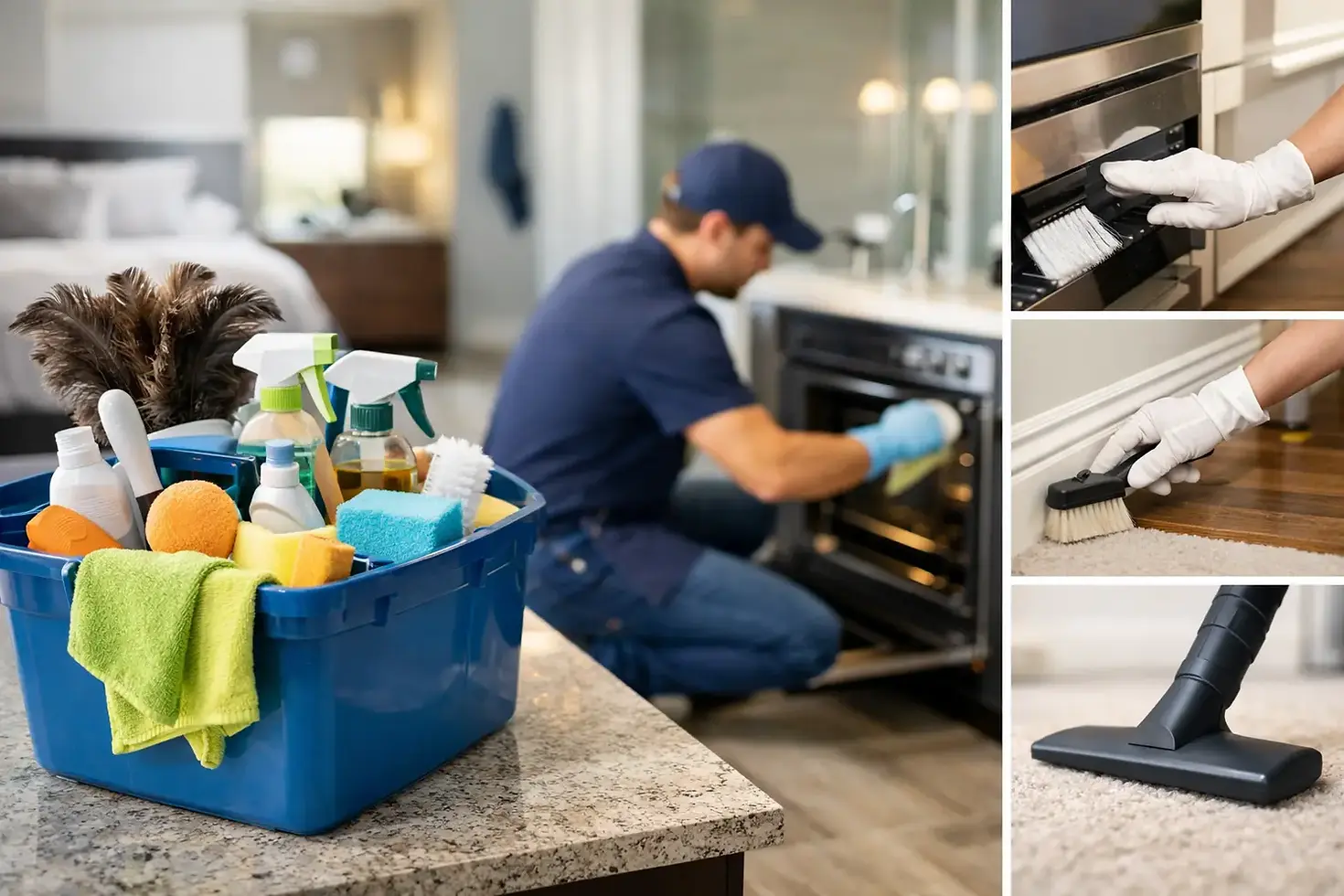
What Is Included in Deep Cleaning?
- Mateo Fernandez Tarazona
- 21 mars
- 6 min de lecture

If your home looks mostly tidy but still feels grimy, that is usually the point where people start asking what is included in deep cleaning. A standard cleaning keeps things under control. A deep cleaning goes after the buildup that collects in corners, on baseboards, behind fixtures, and in the kitchen and bathroom areas that get used hard every day.
That difference matters because many customers book the wrong service. They expect a regular visit to handle months of soap scum, grease, dust, or neglected details. Then they are disappointed when the cleaner focuses on maintenance tasks instead of restoration-style work. Knowing what a deep cleaning covers helps you book the right service, set realistic expectations, and avoid paying for extra time you did not plan for.
What is included in deep cleaning services?
Deep cleaning usually includes the full scope of a standard cleaning plus more detailed work on surfaces, edges, buildup, and areas that are easy to skip during weekly or bi-weekly maintenance. The goal is not just to make a home look neat. It is to reset the space.
In most homes, that means dusting beyond eye level and below furniture lines, wiping baseboards, cleaning doors and door frames, spot-cleaning walls when possible, removing heavier grime in bathrooms, and giving the kitchen more attention around appliances and high-touch surfaces. Floors are also handled with more detail, especially in corners and along edges where dust and hair collect.
That said, deep cleaning is not the same as restoration, post-construction cleanup, mold removal, or full organizing. If a home has extreme buildup, hoarding conditions, pest-related debris, or damage that requires specialty treatment, the work may fall outside a routine deep cleaning scope.
Room-by-room: what is included in deep cleaning
The easiest way to understand deep cleaning is by looking at what gets extra attention in each part of the home.
Kitchen
The kitchen is usually the most labor-intensive area. Standard cleaning often covers counters, sink surfaces, exterior appliance wipe-downs, and floor care. Deep cleaning goes further.
Cabinet fronts are wiped to remove fingerprints, splatters, and grease film. Backsplashes get more detailed scrubbing. The stovetop is cleaned more thoroughly, with attention to buildup around burners and knobs. Exterior surfaces of the fridge, oven, dishwasher, and microwave are usually detailed as well.
Sinks are scrubbed more aggressively to remove stains and residue. Edges around the faucet and drain are cleaned where grime tends to collect. Floor edges, corners, and areas near kickplates also get more attention than they would during a recurring maintenance visit.
The inside of appliances is where expectations can vary. Interior oven cleaning, inside-fridge cleaning, and inside cabinets are often treated as add-ons unless specifically included in the booking.
Bathrooms
Bathrooms are another place where deep cleaning is easy to notice. A regular clean can keep a bathroom presentable. A deep clean focuses on soap scum, water spots, residue, and the grime that settles into grout lines, corners, and fixture edges.
Showers and tubs are scrubbed in more detail. Tile walls, faucets, glass doors, and tracks may all receive extra attention depending on buildup. Toilets are cleaned carefully around the base, behind the seat hinges, and on surrounding surfaces. Vanities, mirrors, counters, and sink fixtures are polished and sanitized.
Baseboards, vents, door frames, and less obvious touchpoints such as light switches are also more likely to be included. If there is heavy mildew, hard water staining, or long-term mineral buildup, results may improve significantly but not always return to like-new condition in one visit.
Bedrooms and living areas
In bedrooms, living rooms, hallways, and common areas, the difference is usually in the detail work. Standard cleaning often means dusting reachable surfaces, vacuuming, and mopping. Deep cleaning adds more edge work and overlooked surfaces.
Baseboards are wiped. Doors, trim, switch plates, and reachable vents may be dusted or cleaned. Window sills, ledges, and furniture surfaces are treated with more care. Under and around furniture that can be safely accessed often gets vacuumed or cleaned more thoroughly.
Ceiling fans, light dust on accessible fixtures, and buildup on surfaces that do not get touched often may also be addressed. The exact scope depends on access, furniture weight, and whether the home has been maintained regularly or has gone a long time between cleanings.
What is usually not included in deep cleaning?
This is where many misunderstandings happen. Deep cleaning is detailed, but it still has limits.
Most professional cleaning companies do not automatically include carpet shampooing, exterior window washing, blind disassembly, laundry, dishwashing, heavy decluttering, biohazard cleanup, mold remediation, pest waste removal, or lifting and moving large furniture. High ceilings, chandeliers, and hard-to-reach areas may also be excluded for safety reasons.
Inside appliances, inside cabinets, and inside closets may be available, but they are often priced separately because they add time. The same goes for walls that need more than spot cleaning. Full wall washing is a different level of labor in most homes.
If you are booking service before guests arrive, before moving, or after a renovation, it is worth asking for a custom scope instead of assuming deep cleaning will cover every task.
When a deep cleaning makes the most sense
Deep cleaning is often the right starting point when a home has not had professional service before, or when regular upkeep has slipped for a while. It is also common before holidays, after illness, at the start of recurring service, or before hosting family, tenants, or short-term rental guests.
For busy households, the best use of deep cleaning is often as a reset. Once the home is brought back to a solid baseline, recurring cleaning becomes faster, more predictable, and more cost-effective. That is one reason many customers book a deep clean first and then switch to weekly, bi-weekly, or monthly visits.
There is also an it-depends factor. A small condo that gets occasional upkeep may need only a light deep clean. A larger family home with pets, kids, and months of buildup may take far longer. The label is the same, but the labor is not.
How long does deep cleaning take?
The timing depends on square footage, condition, number of bathrooms, pets, and how much buildup is present. A one-bedroom apartment in decent shape may take only a few hours. A larger home that has gone months without detailed cleaning can take most of a day or require a team.
This is why hourly pricing is common for deep cleaning. It gives more flexibility when the actual workload becomes clear on site. Customers usually get the best result when they describe the home honestly in advance, including pet hair, heavy bathroom buildup, grease in the kitchen, or rooms that need extra attention.
How to prepare for a deep cleaning appointment
You do not need to pre-clean your home before professionals arrive, but a little preparation helps the service go further. Picking up clothing, toys, paperwork, and general clutter gives the cleaner better access to surfaces and floors. If you want inside-fridge cleaning or cabinet interiors, emptying those spaces in advance is usually necessary.
It also helps to be clear about priorities. If your main concern is the bathrooms, kitchen grease, or pet hair along baseboards, say so upfront. Deep cleaning works best when the expected scope and the available time match.
For customers comparing providers, consistency matters as much as the checklist. A company with clear service definitions, insured cleaners, responsive support, and transparent add-on pricing is usually easier to work with than one that promises everything without spelling out what is actually covered. That is part of the reason customers choose structured providers such as Clean & Shiny when they want less guesswork and a more dependable result.
What is included in deep cleaning versus standard cleaning?
The short version is simple. Standard cleaning maintains a home that is already in reasonable condition. Deep cleaning tackles neglected detail work and built-up grime.
If your home is cleaned regularly, a standard visit may be enough. If you are noticing dusty trim, dirty baseboards, soap scum, greasy kitchen surfaces, or floors that still feel dirty after mopping, deep cleaning is usually the better fit.
The real value is not just appearance. It is getting your home back to a manageable starting point so keeping it clean takes less time, less effort, and fewer catch-up appointments later.
If you are unsure which service to book, the best next step is to ask for a quote based on the current condition of your home, not just its size. A good cleaning plan starts with an honest scope, and that usually saves time on both sides.


Commentaires